The U.S. imprisonment of Venezuelan leader Nicolas Maduro and the subsequent takeover of Venezuela is being considered by some to be a seizure of Venezuela’s natural resources. Do the facts line up with this reasoning? Even though it has just been a few weeks since this unlawful invasion, people are already moving on to the next big controversy.
To quote the U.S. Department of Energy fact sheet, “The U.S. government has begun marketing Venezuelan crude oil in the global marketplace,” and that “All proceeds from the sale of Venezuelan crude oil and oil products will first settle in U.S. controlled accounts at globally recognized banks to guarantee the legitimacy and integrity of the ultimate distribution of proceeds,” which will go towards “the benefit of the American people and the Venezuelan people at the discretion of the U.S. government”.
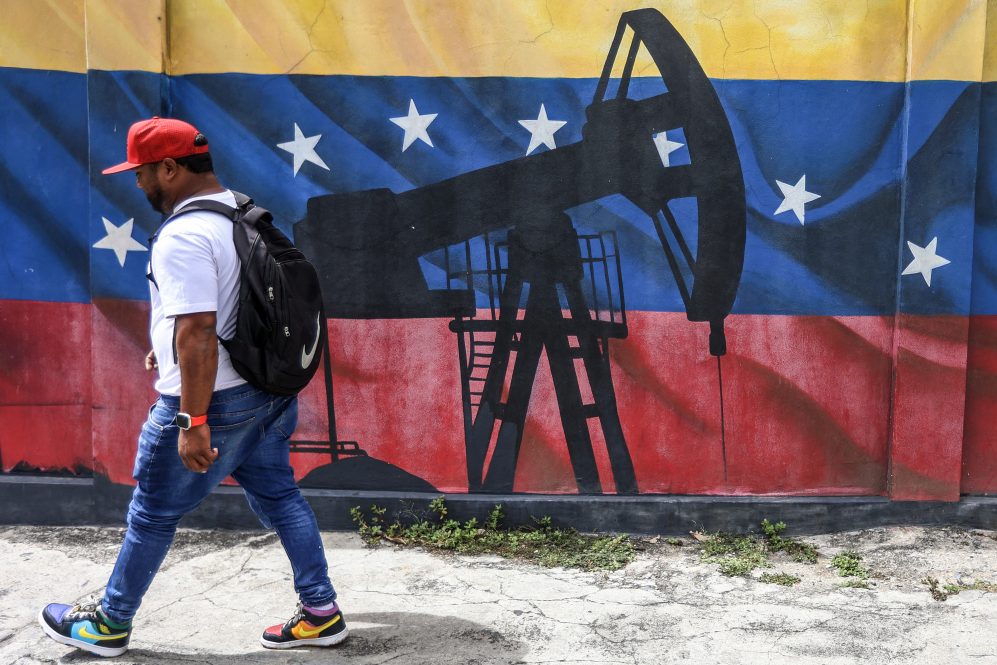
Venezuela holds the largest oil reserves in the world, with 303,221 billion barrels of oil collected in 2024. However, refinery and export of this oil had slowed down due to U.S. sanctions of the country, including a blockade and embargo that left only China and Cuba willing to take the risk for the oil. Interestingly, the US bought the second largest percentage of Venezuelan oil, after China.
Despite most of Venezuela’s refined oil being shipped to China, Venezuelan oil does not even register in comparison to China’s other sources of oil: Russia, Iraq, Malaysia, and Brazil. The same is true of the U.S.
Cuba’s main source of oil is Venezuela. Around 60 percent of Cuban petroleum is from Venezuela, due to a 2000 energy agreement, and oil accounts for more than 85 percent of energy generation in the country. Without Venezuela, Cuba is left vulnerable, leading many to speculate that Cuba might be the Trump administration’s final target.
President Trump has issued numerous statements in an interview with The Atlantic about the operation in Venezuela, primarily that “regime change, anything you want to call it, is better than what you have right now. Can’t get any worse.” Under Trump’s first administration, Nicolas Maduro was indicted with narco-terrorism charges.
Surprisingly, there is no unified definition of narco-terrorism. Donnie Marshal, in a 2002 article titled Narco-Terrorism: The New Discovery of an Old Connection argues that narco-terrorists are “drug trafficking groups [that] have long been involved in kidnapping, torture and murder, along with the assassination and intimidation of public officials and citizens alike. These groups… have no political agenda. However, their terrorist acts have the same effect as politically motivated terrorists: they render political, judicial, economic and commercial institutions ineffective, and destabilize the government and the economy.”
The U.S. Department of Justice alleges that “Maduro very deliberately deployed cocaine as a weapon,” and that “These officials repeatedly and knowingly betrayed the people of Venezuela, conspiring, for personal gain, with drug traffickers and designated foreign terrorist organizations like the FARC.”
Maduro denies this, and has pleaded not guilty.
Regardless of whether or not Maduro is guilty, the manner in which he was taken from his residence and has been removed from his position as leader of a foreign power is highly illegal.
The U.N. Charter, under Chapter 1, article 2, states that “All Members shall refrain in their international relations from the threat or use of force against the territorial integrity or political independence of any state, or in any other manner inconsistent with the Purposes of the United Nations.”
The removal of the sitting president of Venezuela certainly seems to be a use of force against Venezuela’s territorial integrity and political independence.
However, many consider Maduro to be a dictator of his country. Maduro has ignored the official results of the 2024 election to stay in power, using his influence in the country’s military to prevent a peaceful transition of power. Even if the Trump administration intended to remove Maduro from power to end a dictatorial regime, this has not been realised.
Venezuela is currently under the control of interim president Delcy Rodríguez, and it seems the power structure in the country without Maduro is remaining surprisingly similar to how it was before his capture. Despite some concessions of journalists from prison, the opposition party, widely considered to be the favoured party of the Venezuelan people, has not gained power. María Corina Machado, previously lauded by Trump, has been sidelined in official diplomatic proceedings, and Trump has said that Machado “doesn’t have the respect” to run the country.
Venezuela is facing a troubled time in the months ahead, and it is unclear if the Trump administration will follow through with many of its other statements about other sovereign nations, similar to Venezuela. Either way, it is unlikely for other countries to scoff at the President’s threats any longer.
Article by Emmett Coughlan
 The Axe
Super interesting, I love getting to see amateur writers branching out and expressing their thoughts. Keep up that good work coughman!
-Andrew
LikeLike