
What To Know About the 3I/ATLAS Comet
On July 1, a new interstellar comet was introduced to our solar system, the 3I/ATLAS. NASA has identified this comet as a non-threat to earth, which makes it safe to observe from afar. In fact, NASA believes this comet holds a lot of valuable information about celestial cities outside of our own.
The 3I/ATLAS gets its name from the three variables of its discovery. The “3” in its name is derived from the fact that it’s the third recorded interstellar object to enter our solar system. The “I” stands for interstellar, and “ATLAS,” otherwise known as the Asteroid Terrestrial Last Impact Alert System, comes from the telescope it was discovered by; NASA’s ATLAS survey telescope in Río Hurtado, Chile. It’s classified as a comet and not an asteroid because it is currently active.
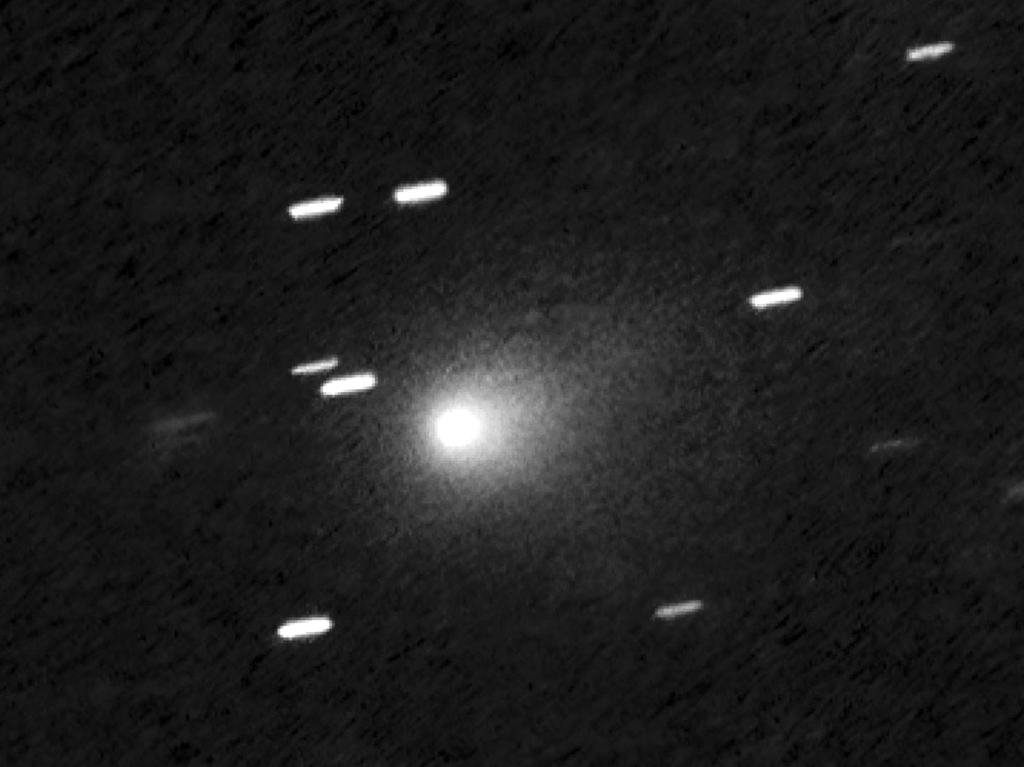
NASA, ESA, David Jewitt (UCLA); Image Processing: Joseph DePasquale (STScI)
On Oct. 30, the 3I/ATLAS reached its closest point to the sun with a distance of about 210 million kilometers. On Dec. 19, the comet will approach its closest to Earth at a completely safe 270 million kilometers. We can expect the 3I/ATLAS to stick around well into spring of 2026. Scientists have yet to determine the exact size of the comet, though recent images from the Hubble Space Telescope made it clear that it was bigger than 1,400 feet, and smaller than three and a half miles in width. When it was first identified, this comet entered our solar system at a speed of 137,000 miles per hour and is predicted to leave us at the same speed due to the parabolic nature of its trajectory.
There are two unique factors that differentiate the 3I/ATLAS from comets formed in our solar system. These factors were discovered early on, and further research has yet to be done, but this is what we know so far. For one, the comet’s two comas (the clouds of dust and gas surrounding comets) have a high composition of nickel with an absence of iron, though it is typically found alongside that nickel in local comets. And secondly, the comas have an exceptionally high ratio of CO₂ to water vapor. We don’t know where the comet is exactly from, but NASA has been able to identify that it comes from the general center of the Milky Way around the constellation Sagittarius. They also found that because its CO₂ is completely frozen, it formed far away from the star in its solar system.
NASA is constantly producing new pictures of the 3I/ATLAS and will continue to do so until we have to say goodbye to it in spring of 2026!
Article by Penny Deitz
 The Axe