As the phone ban at South approaches, could these restrictions benefit the mental health of students?
Nine in 10 Americans own a smartphone. Cell phone use has increased among teens each year, and phones have become integrated more and more into the everyday life of a teenager. According to the Pew Research Center, more than half of all teens report using social media daily. Access to cell phones provides teens with an important way to connect with friends, and research shows that it can be protective against depression and suicide if used only a few hours each day.
However, constantly having access to these devices can also have a negative effect on teens. Excessive use of cell phones can signal addiction, with the potential loss of these devices causing anxiety or stress. The frequent updates and notifications can cause anxiety, a fear of missing out, and disrupted sleep. Additionally, one in three high school students have experienced cyberbullying at some point, and close to 20 percent of teens have reported missing school due to cyberbullying. A few South staff had thoughts on cell phones at school.
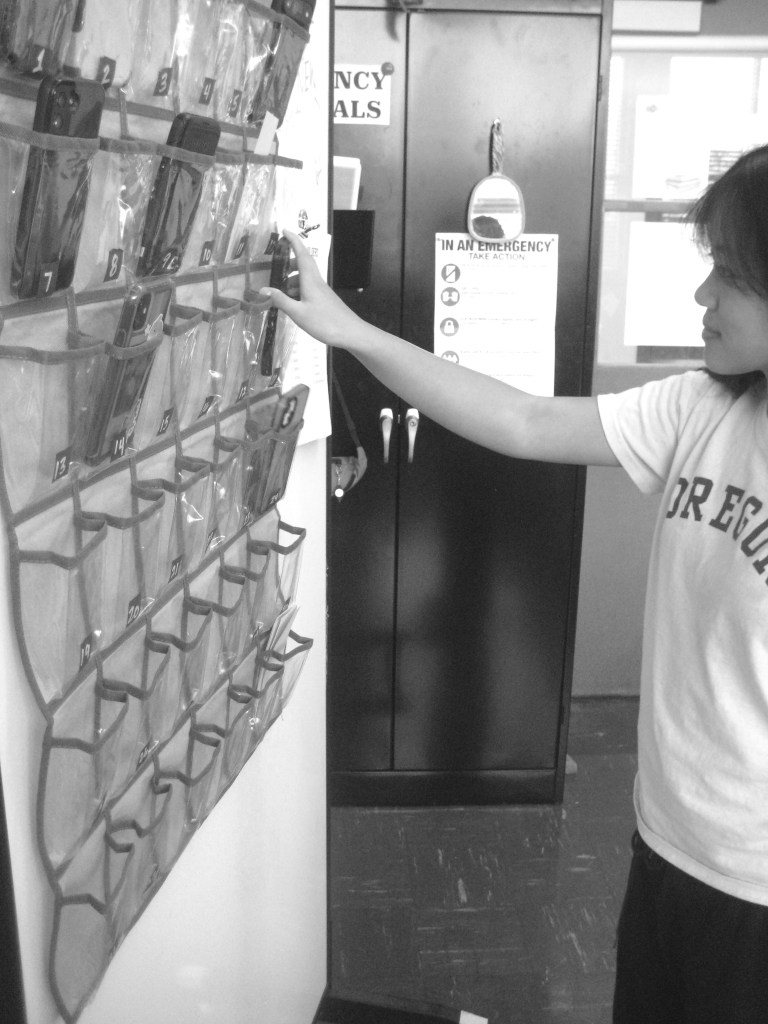
Senior Lily Yao places phone in cell hotel.
Journalism teacher and newspaper adviser Bobbie Willis commented on the importance of learning to use technology responsibly.
“We’re all going to have to learn how to have these powerful phones in our lives without them distracting us from what we really need or want to do with our time,” noted Willis.
Smartphones are not going away any time soon, so learning to use them without causing harm is essential. Counselor Melissa Martinez has seen improvements throughout our school community since using cell hotels.
“Students are more engaged with each other, and seem naturally more happy,” said Martinez.
In addition, Martinez has seen many students with improved mental health.
“In the last two years, overall less people are in my office crying,” she observed.
It is important to find a healthy balance when it comes to how much you use your phone throughout the day, and the upcoming ban may force students to figure this balance out sooner rather than later.
Article by Anna Andrejko
 The Axe