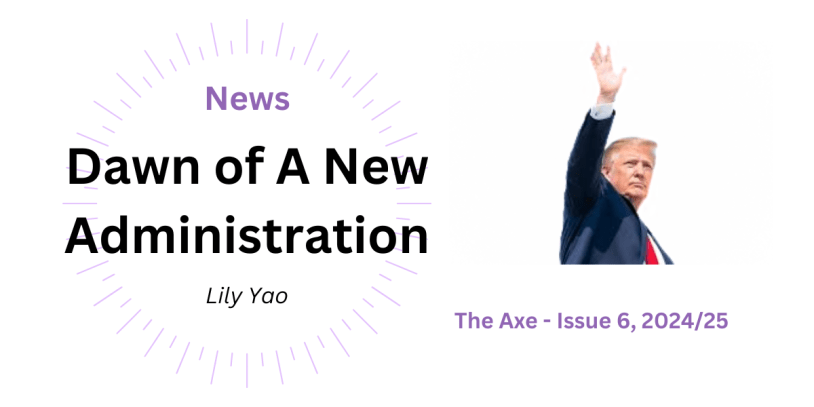
“The golden age of America begins right now,” President Donald Trump promised last week in his inauguration speech. “From this day forward, our country will flourish and be respected again all over the world.”
Jan. 20 marked Trump’s second time ascending to the nation’s highest office. He was sworn in as the 47th president of the United States, alongside Vice President J.D. Vance. The ceremony took place inside of the Capitol Rotunda (a last-minute change from the typical outdoor setting, due to sub-freezing temperatures).
Notable attendees included former U.S. presidents, Trump’s political supporters, and myriad tech billionaires and foreign leaders. Elon Musk, Jeff Bezos, and Mark Zuckerberg, the three wealthiest men in the world, were seated next to Trump family members ahead of cabinet nominees—signaling Trump’s growing closeness with the business and tech elite. The combined net worth of his audience was more than $1 trillion.
In his inaugural address, the president laid out his visions for the country alongside sharp criticisms of the outgoing administration, promising a nation “greater, stronger and far more exceptional than ever before.”
“We now have a government that cannot manage even a simple crisis at home while at the same time stumbling into a continuing catalog of catastrophic events abroad,” Trump declared, painting a bleak picture of America in decline and condemning the actions of his predecessors. “My recent election is a mandate to completely and totally reverse a horrible betrayal, and all of these many betrayals that have taken place and to give the American people back their faith, their wealth, their democracy and indeed their freedom.”
These words reflect Trump’s long-standing populist and anti-elite rhetoric, even in front of an audience that included many of the wealthiest elite.
The main issues the president focused on were immigration, the economy, and social policy. Much of the speech revolved around border security. He promised to declare a national emergency at the southern border, reinstate the “remain in Mexico” policy, end the practice of “catch and release,” deploy additional troops to the border, and designate Mexican drug cartels as foreign terrorist organizations.
Trump also pledged policies aimed at strengthening U.S. global influence. “Instead of taxing our citizens to enrich other countries, we will tariff and tax foreign countries to enrich our citizens,” he stated.
At the same time, Trump proclaimed a “revolution of common senses,” terminating DEI programs in the federal government and announcing that the government would only recognize two genders under his administration, thus ending “the practice of trying to engineer race and gender into every aspect of public life.”
Since then, the president has begun his term with a sweeping series of executive actions—from pardoning some 1,500 Jan. 6 defendants and suspending the U.S. TikTok ban for 75 days, to key campaign promises targeting federal bureaucracy, immigration at the United States-Mexico border, gender politics, and environmental protections.
Article by Lily Yao
 The Axe